
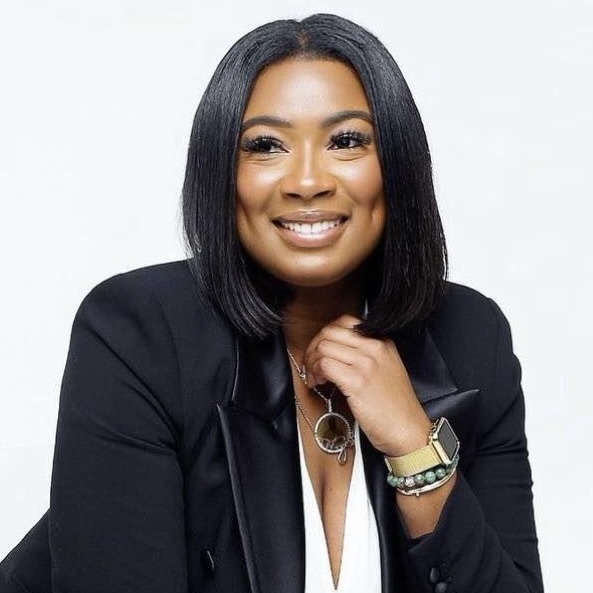
On Changed for the Better, we’ve talked a lot about how people’s lives shift over the course of time. Just when you think you know what you want, the universe pulls you in a different direction. Floryane’s story is all about accepting change, re-defining her purpose and establishing a plan for course-correction.
In high school, Floryane opted to take dance classes instead of Physical Education, even though she loved sports and athleticism. As any smart athlete knows, the benefits that a dance education offers can enhance their sport performance for a host of reasons. (Why? Check out this NCSA article for a little breakdown.) While she was on the basketball team, she was also a dance club member and enjoyed performing in our yearly dance concerts. The dance studio gave her a space to enjoy a passion that she thought would have left behind back in her childhood. Of course, now that she is an adult, she misses the easy access to a dance studio because of…well…adulting.
In her senior year, Floryane was in her glory doing everything she loved. Unfortunately, while training for the spring season, Floryane suffered a bad ACL injury that benched her from both basketball and dance. That was a difficult blow that seems to be at the center of what she would eventually choose as a career path for herself. More on that later.
After high school graduation in 2011, she started her college career at RCC, and then transferred to Hofstra University where she received a Bachelor’s degree in Sociology. Her original plan was to work with at-risk youth in foster care and child welfare, and through that work discovered a new passion: being a mental health advocate, especially for young people. At that point, she had a clearer picture of what she wanted: her gut feeling was to go back to school to Mercy College and get her Masters degree in psychology, which she completed in 2022.
She is taking this new direction with vigor. Right now, she is working as a family foster care supervisor, but she has her sights set on taking her education one step further; she is now pursuing doctoral programs in Clinical Psychology with a focus on sports. One day, we will call her Dr. Joseph. Or maybe Dr. Flo. Either way, I’m excited to share her story.
A few words on mental health
When I was growing up, even when I was a young teacher, the term “mental health” was not the buzzword that it is today. It was (at best) an afterthought, certainly not something important that should be attended to on a regular basis. The Gen-Xers like me were taught to put our heads down, grin and bear it: be tough, don’t cry and move forward. No one gave much thought to how we were actually responding to our environment, or to teaching us how to navigate the difficult feelings that growing up put before us. To be honest and fair, I think that was true because our parents and teachers themselves didn’t really know how to navigate the pitfalls of mental health in a well-adjusted way.
Compound that with the fact that in Spring Valley, the families are largely poor, immigrant, and just trying to keep their heads above water. A large majority are from families who are black or brown, and their cultural backgrounds often do not leave much space for mental health concerns and children learned to cope the same way we Gen-Xers did back in the 80’s. Even today, the kids who are new immigrants are not well-versed in paying attention to their feeling and developing healthy coping strategies. They’re just getting by from one day to the next.
Thankfully, the social discourse around mental health has been changing (for the better). In education, social-emotional learning (SEL) is at the forefront of our minds when we teach, and we are doing a better job of teaching the whole child, rather than a strict focus on academics. Often, we are charged with catching kids who may be slipping through the cracks because they have significant mental health concerns at the root of their problems. We spend more time passing on the useful strategies that we have learned as (hopefully) healthy adults, so that kids deal with their trauma in a more productive, supported way. While we are not therapists, we can build strong relationships so that kids can learn in a safe environment that they can trust.
While Floryane was completing her undergrad degree in social work, she realized that she wanted to take a different path and chose to pursue her Master’s degree in psychology. Having been a student athlete herself who had gone through the physical and emotional trauma of being injured and sidelined, she had an acute interest in the mental health of student athletes.
Sometimes, the mental health issue isn’t starting at the collegiate or elite level; it can start in high school, in middle school. I’m so happy that now it’s becoming more a part of a conversation because when I was in high school, [it was] “mental health what?” I just thought there was sad, mad and happy.
As she did her research, the trend she saw was that in all the literature, the focus was on elite or collegiate athletes. This was when the lightbulb turned on in her brain.
I found my purpose and I’m going for it.
Wearing the mask
Floryane was a relatively well-adjusted child with lots of family support. Even living in a home environment where she did not want for much, Floryane was not immune to personal trauma. In high school, Floryane was a self-professed free-spirit with an open mind, who appeared to be happy more often than not. Unfortunately, maintaining the appearance of being okay, especially when you’re not, creates a buildup of emotional baggage that becomes very heavy to carry.
My adolescent self did a whole lot of pretending. On the surface, I looked like I was one way, “I’m always happy, so cheerful” and now when I think about it, it was all just a facade. There was a lot of emotional trauma that I didn’t deal with and as I’m getting older it’s piling up and then BOOM! – now you have to deal with it. I wore a very good mask.
Thankfully, she is now aware that wearing the mask all the time does more harm than good. She sees the value of being your authentic self, which means that the world will sometimes see that you’re not always having a great time. Her work as an adult is about allowing herself to be more vulnerable, which helps her to stand in her authentic self more often.
I’m able to accept that life isn’t perfect. You may have a plan in your head and there’s going to be many curveballs, and that’s okay.
What also helps is allowing herself to feel and be vulnerable. As a teenager, that mask went up often, brushing her feelings aside to keep pushing forward. Now, instead of pushing, she stops to acknowledge the feelings she’s having and rather than avoid them, she works through them.
Dealing with trauma
When Floryane was a child, her parents saw her dance around the living room and decided to put her into ballet class. Early on, the studio saw that she could handle more skill than a beginner class offered and put her in more advanced classes. Her teacher, who she had throughout all the years she danced, pushed Floryane to help her meet her potential, something Floryane now appreciates tremendously.
She pushed me in ways that I didn’t think I could be pushed. She even called me Grandma because she knew that [I could do better].
Sadly, that teacher suddenly passed away and the shock caused Floryane to stop dancing altogether. (Now, who is going to push me?) She wouldn’t fully understand the impact of the loss of her teacher until much later in her adulthood.
When she got to high school, Floryane saw that dance was offered as a gym credit, and she struggled with the thought of entering another dance studio. She loved sports, especially basketball, but the idea of dancing again was enticing. Also, she thought it would be an easy A but questioned whether she could emotionally cope with her ongoing feelings from losing her beloved dance teacher. She eventually decided to take the class and put the mask on when necessary. Fortunately, she found the atmosphere in the high school studio to be familiar and refreshing.
You presented the same way she did; in believing in all of your students and that made me feel better; It cushioned the blow a lot. Every day I showed up and you gave everyone that push, that belief that they could do it and you allowed such a fun space so everyone could be themselves. That made me fall in love with ballet all over again.
Those are the validating sentiments that every teacher loves to hear; that what you have to offer students, whatever content you teach, is rich with the stuff that makes kids connect with both you and the content. Our job as teachers is to make young people believe that they can do something so that they will choose to try, fail, and try again. When they get hooked on the stuff of your content, it’s really exciting.
What is even more exciting is when a student’s passion that has lain dormant for years because of past trauma, gets re-ignited. Even better, Floryane is once again sensing that passion bubbling up to the surface and is feeling more compelled to seek out more dance training as an adult. That is music to my ears.
Sage advice for her teenage self
I asked what advice she might have given herself back in high school to help ease the way:
Take your time. If I were to have taken my time, I would have made smarter decisions.
Of course, she recognizes the stubbornness of adolescence and that her younger self might have brushed that good advice aside. We talked about the possible reasons for that need to rush through things during that time of life, and we came to two conclusions: they’re trying not to feel certain things and/or they don’t think they are allowed to feel the way they do. It doesn’t matter what generation you are born into; so often, the adolescent brain seems to act like a GenX brain when it comes to dealing with a flurry of emotions.
Case in point: Floryane’s ACL injury happened in the December of her senior year. She was about to enter the basketball season and we were getting ready to start dance concert work. When the injury happened, a flood of emotions overcame her that she didn’t know how to process. In a way, it felt similar to the loss of her beloved ballet teacher. In both cases, she pushed her feelings aside in an effort to move forward. She wanted to focusing on her recovery, rehab her knee, and get back to playing basketball. While her athletic trainer got her up on her feet and walking very quickly, Floryane was rushing to get back to “normal.”
Not dealing with the emotions; in learning what I’m learning in sports psychology, there are so many things I would have done differently. I didn’t want to feel it, I didn’t want to go through it. I’m just like, “can we just get this over with?” In me not taking my time, allowing myself to feel, going through the emotions, there’s decisions that I didn’t properly make, and I’m feeling it now.
Unfortunately, an ACL tear many months to recover from and requires great patience to do it properly. “Normal” would not come to pass. She wouldn’t play in her last basketball season, nor would she dance in her final dance concert, which were both devastating losses for Floryane. These are the types of things that Floryane wishes she had better guidance on in dealing with the intense feelings of loss that she experienced. They are the things that she wants to help young athletes of the future to process so they don’t have to wear a mask. She wants them to be able to grow into their adulthood without the burden of unresolved emotional trauma.
Lessons from the studio
We talked about the life lessons that are learned in the dance studio. Floryane took things a step further an likened life to a dance routine, a metaphor that she continues to see play out throughout her life:
- Dealing with change: You could go into class and your teacher is going to show you a routine and the next day, nah, we’re going to change it, throw a curve ball. You finally got the dance move down pat and now [you’ve] got to relearn another one.
- Learning to focus on yourself. I dance one way, and the person next to me is going to dance a different way, but that doesn’t mean I’m doing it wrong. It’s [about] focusing on yourself, how you’re performing.
Dealing with imposter syndrome
Focusing on your own personal progress is an important strategy that is developed in the studio. Oftentimes, taking class is fraught with feelings of imposter syndrome. We have talked a lot about that on the podcast.
Even highly successful people like Chizi Duru, Darian Garner, Karema Brown, and Tina Vasquez have battled the beast. They all learned strategies to deal with it in dance class. In the same space where you are working on technique and performance, your brain is comparing yourself to all the other people in the room. Floryane recalled her experience taking a class at RCC where she kept trying to dance as beautifully as one of her classmates. What she didn’t realize until later was that many of her other classmates were looking at her the same way and trying to dance just as beautifully as she did.
Reflecting on that experience has taught her to be mindful of her own progress and to value her own learning process. That mindset is often the antidote to imposter syndrome, something Floryane is working hard to remember.
Finding joy in the journey
For all of the wisdom that she has gleaned from navigating her life, Floryane is still grappling with the truth that everything (whatever that is) happens in its own time.
I am struggling with accepting that things aren’t happening “on time.” When you’re younger, you see a life that’s going to happen. As you’re going through life, it’s not happening. Now, it’s playing with your emotions: “am I late?” “am I delayed?” “is it going to happen/not going to happen?” I’m trying to find ways to remind myself that it’s okay, it’s going to be okay, and it’s going to happen.
Since we are not prognosticators, and our future paths are often so cloudy, it’s easy for us to cast doubt on what we are doing to get to where we want to be. This is especially true when you graduate from college with a degree that puts you on a different path than the one you really want to be on. Her original plan was to go into a lifetime of social work, which she later realized was not going to make her happy. The plan has now shifted and she understands that her mission is to become a sports psychologist to help kids (like her) navigate the emotional challenges of being a student athlete. Floryane works to remind herself of this very important point:
The plan that I had in my head is a rough draft. As I’m going through life, the final copy is going to come. The plan that I had in my head: it’s okay that it doesn’t happen.
That’s why we are all works-in-progress; we don’t have all the answers when we want them. Our stories aren’t pre-determined. It’s hard for adolescents and 20-somethings to embrace that, be honest with themselves in real time, and pivot when they realize they need to switch gears. That kind of honesty often adds time and effort to your life that wasn’t a part of the plan, and it can create real doubt in the choices you make for yourself. In the end, we are on a journey to find our purpose and engage in the activities that make it come to life. Life is fluid, our purpose can change, and the best we can do for ourselves is to remember that as we go, accepting the inevitable shifts along the way.
I am allowing myself to be vulnerable with myself first, It helps me accept changes that are coming.
She quoted something she heard from one of her college professors: There’s joy in the journey, not just the destination. Loving the journey makes it much easier to weather the emotional storms that come in the wake of change.
It’s making me stronger – mentally.
Self-care
As part of her self-care routine Floryane offered some sage advice that she follows on a regular basis:
I have seen so many benefits in writing your thoughts down. Whatever is going on in your head, even if it feels like mumbo-jumbo, write it down. It will make sense to you. Writing down thoughts and action steps; give yourself a realistic timeline. In writing those thoughts down, you are being real with yourself and no one else has to see it.
In addition to regular journaling, she offered a few more practices that she uses to keep herself centered and regulated.
- Imagery and being mindful. For 30 minutes a day (at a minimum), Floryane gives herself quiet time, often outdoors, where she sits back and visualizes her action steps.
- Positive self-talk. We often practice negative self-talk because it’s easy to fall into that habit. Floryane makes it a habit to be more positive and motivational when she talks to herself. It stemmed from her workouts and now extends into everything she does.
- Controlling the controllable. In her sports psychology studies, this is something in which she has found value. As she reviews the things she journals, she reflects on the things that she can control. This practice helps boost her confidence and develops her stamina for pursuing her purpose.
You can follow Floryane in her journey to become a sports psychologist on her Instagram page @getpsychedwithflo!
Follow the blog, check out our chat on YouTube, and follow the Changed for the Better channel there for notifications when new episodes drop. Also, you can listen to these episodes on Spotify and Apple Podcasts!
 Changed With Tirro
Leave a comment